Amélie Perkins A New Country, The Same Dream
From Great Britain and her first major international experience at 16, to Serie A and the Champions League with Plebiscito Padova, and now Mladost Zagreb. Amélie Perkins speaks exclusively to YARE about her journey, life away from home, the centre forward position, and her decision to build the next chapter of her career within Croatian water polo.
AMÉLIE PERKINS A NEW COUNTRY, THE SAME DREAM
YARE EXCLUSIVE | THE PATH
At 16, Amélie Perkins was already playing at a European Championship.
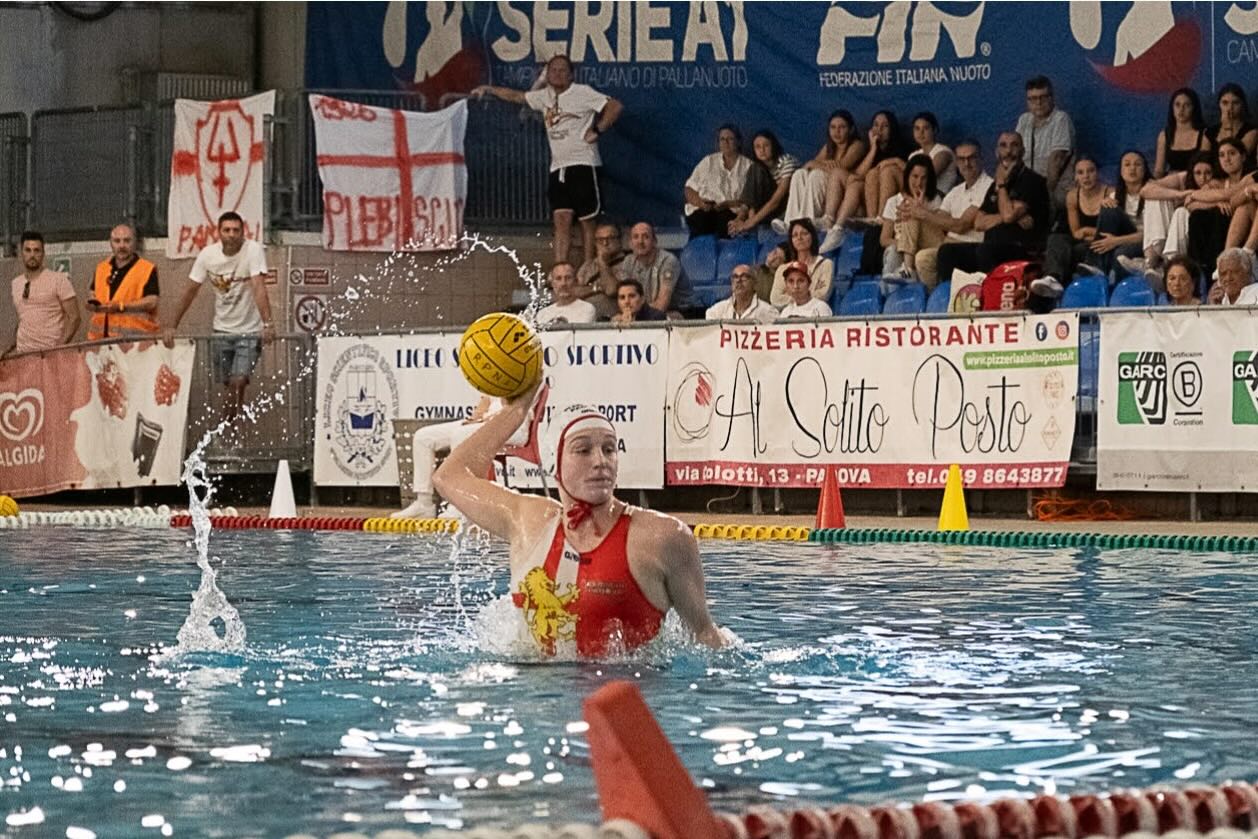
At 17, she competed at a World Championship. That same year, she left England for Italy and entered a completely different water polo world: Plebiscito Padova, Serie A, the Champions League and daily training alongside some of the game’s most accomplished athletes.
Now comes another change.
Perkins has moved to Zagreb and joined Mladost. But when she speaks about Croatia, she makes something clear from the beginning: this is about much more than changing clubs.
It is about choosing the environment in which she wants to build the next stage of her career.
And, eventually, about the possibility of representing Croatia.
For YARE, Perkins opens up about the experiences that shaped her, the reality of leaving home at 17, what being a centre forward really means beyond goals and statistics, and why she believes Croatia is the right place for what comes next.
Pressure came early
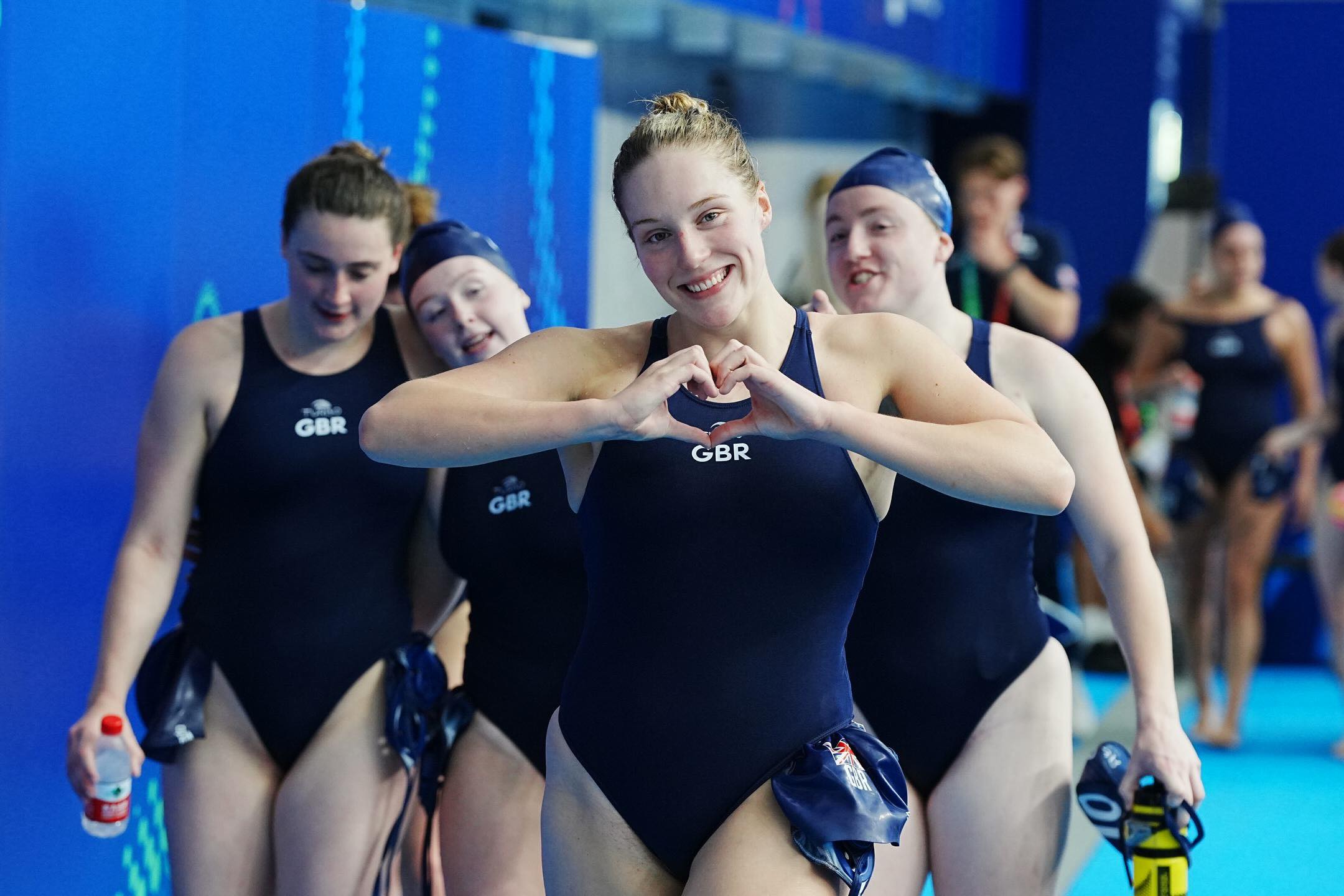
Nick Buller brought Perkins into the Great Britain senior team when she was just 16.
For a young athlete, that meant being exposed almost immediately to the pressure of senior international water polo.
One memory remains particularly vivid: facing the Netherlands at the 2024 European Championships in front of thousands of spectators.
“Experiences like that have taught me to trust myself and stay focused.”
Playing a European Championship at 16 and a World Championship at 17 taught her how to stay composed under pressure, but she says those years also taught her something less visible: resilience.
The experiences she went through, both in and out of the water, began to shape not only the player she wanted to become, but the kind of environment she wanted around her.
That question would become increasingly important as her career moved beyond Britain.
England built the hunger. Italy changed the level.
Perkins’ route into elite water polo was far from conventional.
Growing up in England, she says she had access to around three water polo sessions per week, alongside swimming and gym work, with relatively limited coaching.
So a significant part of her development came from somewhere else: herself.
She trained alone. She watched YouTube. She studied clips of her favourite centre forwards and tried to teach herself different aspects of the position.
Then, at 17, she arrived at Plebiscito Padova.
Suddenly, all that motivation and willingness to learn had a professional environment in which to grow.
“I was surrounded by experienced coaches and players every day, training at a much higher intensity and learning things that I couldn’t have learned by myself.”
Under Stefano Posterivo, a 17-year-old English centre forward was given the opportunity to play a significant role for a club with a major domestic pedigree, competing in both Serie A and the Champions League.
Her European story began in memorable fashion: she scored against FTC on her debut.
Padova also exposed her to Olympic medallists and players from numerous national teams. The game became faster. Decisions had to come sooner. Different opponents demanded different solutions.
For Perkins, Italy became an education in both the technical and tactical dimensions of elite water polo.
But Padova changed more than her game.
At 17, she had moved abroad alone.
New country. New language. New culture. New life.
She had to become independent quickly.
What really defines a centre forward?
Ask Perkins what defines her game and three things come first:
Strength. Physicality. Work ethic.
She likes the physical contest. She wants to compete for every ball, fight for position and make life uncomfortable for defenders.
But one element she stresses is particularly interesting: swimming.
“I’m also a big believer in being able to swim fast as a centre forward.”
At the highest level, she argues, the game moves too quickly for a centre to contribute only in one area of the pool.
That is why she continues to work not only on strength and shooting, but on swimming, positioning and decision-making.
And it leads directly to one of the strongest ideas in her interview.
“Being a good centre forward isn’t just about scoring goals.”
For Perkins, the position is also about creating opportunities for teammates, fighting for space and becoming a presence the team can rely on.
The numbers matter. But they don’t tell everything.
Perkins does not dismiss statistics.
Quite the opposite.
She believes they provide an objective way of identifying what is working and what needs to improve.
But she also believes a player — particularly a centre forward — cannot be understood through a goal total alone.
A centre can draw defenders and open space elsewhere. Win position. Help create a counterattack. Make the decision that eventually produces a goal for someone else.
None of those actions necessarily appears next to her name on the scoresheet.
“If you only look at the goal sheet, you could have five goals and still have made defensive mistakes, not created enough space for your teammates or made the wrong decisions during the game.”
That distinction matters.
For Perkins, becoming a top-level athlete means examining the entire performance: the decisions made, the work done in every phase of the game and the areas that still need improvement.
Not simply asking:
How many did I score?
But:
How much did I contribute?
Why Mladost and why Croatia?
The answer begins with an important distinction.
“The step to Croatia wasn’t just about Mladost but about Croatian water polo as a whole and the opportunity to become part of that environment.”
Perkins is now committing herself to life in Croatia while pursuing the process required for a future change of sporting nationality.
Under the current World Aquatics framework, any eventual change remains subject to its eligibility requirements and approval process.
For Perkins, however, the period in Croatia is not simply something to complete.
She sees development in it.
At Mladost, she can experience Croatian water polo from the inside, learn the culture and language and train alongside players she hopes may eventually become national-team teammates.
She is already working under Mia Šimunić, an experience she says she is enjoying.
And Mladost itself matters.
Its history of developing Croatian water polo players gives Perkins something she has repeatedly sought throughout her journey: an environment where high-level coaching and high-level players surround her every day.
“It wasn’t a difficult decision”
When asked whether the international decision was difficult, Perkins does not hesitate.
“It wasn’t a difficult decision for me.”
She says she had reached a stage in her career where she knew it was time to close one chapter and move forward.
When the Croatian opportunity appeared, the timing felt right.
But what stands out most in her answer is not a result, a contract or a competition.
It is four words:
Supported. Valued. Welcomed. Believed in.
That, she says, is how she has felt since arriving in Croatia.
“I’m now always focused on what’s ahead of me rather than looking back.”
What wearing the Croatian cap would mean
Perkins speaks about the possibility with genuine excitement.
Croatia’s water polo history is not lost on her. Neither is the responsibility she believes would come with representing the country.
“There have been so many great female and male players who have represented Croatia before me, so it will be an honour to become part of that history.”
She is also looking at where Croatian women’s water polo could go next.
At the 2026 European Championships, Croatia fielded the competition’s second-youngest squad, with an average age of 19.8.
For Perkins, that youth represents possibility: a group with time to develop together and an opportunity for Croatian women’s water polo to continue closing the gap to the established leading nations.
She wants to contribute to that process if and when she becomes eligible to do so.
Becoming more than a centre
Her next stage of development is not exclusively offensive.
Perkins wants to improve defensively and has recently enjoyed working in other positions, including centre defender.
The reason is practical.
In a game as dynamic as water polo, a player cannot always predict where she will find herself.
So versatility becomes another weapon.
Her objective is to become a player capable of contributing confidently in different situations — not simply a specialist defined by one position or one statistic.
The sacrifice behind the journey
There is another side to moving countries so young.
Family.
Perkins describes being away from them as the hardest part.
But she grew up with someone who understood that particular sacrifice unusually well.
Her father was also a professional athlete and moved abroad when he was young while playing rugby.
He understood the commitment required to pursue a sporting dream away from home. The difficult moments. The sacrifices. And also the satisfaction that arrives when years of work begin to show themselves in training, matches and major competitions.
For Perkins, having someone so close who understood that reality made the journey easier.
And despite moving between countries at such a young age, she says she has never really been nervous about doing it.
Because she knows why she is doing it.
She loves the game.
The same dream
Great Britain gave her international experience remarkably early.
Italy gave her a professional environment in which to accelerate her development.
Croatia is the place she has now chosen for what comes next.
Different countries. Different coaches. Different styles of water polo.
But when YARE asked Perkins to complete one final sentence
“The next chapter starts with…”
— she brought the entire journey back to one idea:
“A new challenge, a new country, a new team, a new environment, but the same dream.”
AMÉLIE PERKINS
A NEW COUNTRY. THE SAME DREAM.
THE PATH | YARE WATER POLO
VIDEO
Content from YouTube
To display it, first allow external media in your privacy settings.
PHOTO GALLERY