Stop Calling It a Minor Sport
Australia’s U18 women made history with a world title. Yarim Delpino examines the ambition, belief and future shaping Australian water polo.
 By YARIM DELPINO · Sports Writer, Editor & Water Polo Analyst
STOP CALLING IT A MINOR SPORT
Australia’s Water Polo Ambitions Rise as the Sport Looks to Its Golden Generation
In the heat of a Spanish summer, a remarkable generation of Australian women stepped into the spotlight, defeated the defending champions 9 to 5, and claimed a world title that had never before belonged to them.
By Yarim Delpino
1 September 2026
Puerto de la Cruz, Tenerife, Spain
EDITOR’S NOTE
YARE welcomes Yarim Delpino, a sports writer, editor and lifelong water polo insider, analyst and observer of the modern game, for an exclusive editorial examining what Australia’s historic U18 women’s world title means beyond the scoreboard.
Following his essay, Delpino speaks with tournament MVP Bless Daly and captain Kiera Mironova about belief, opportunity, visibility and the future of Australian water polo.
THERE WAS NOTHING MINOR ABOUT IT
Australia has a habit of deciding which sports matter.
The television ratings decide. The crowds decide. The sponsorship dollars decide.
Water polo rarely wins that argument.
Not yet.
But perhaps the question is wrong.
Because while Australian sport was busy arguing about which code deserved the biggest stage, a group of teenagers travelled to Spain and took the one thing that cannot be debated.
A WORLD CHAMPIONSHIP.
AUSTRALIA 9
SPAIN 5
The defending champions beaten.
The host nation silenced.
History made.
There was nothing minor about it.
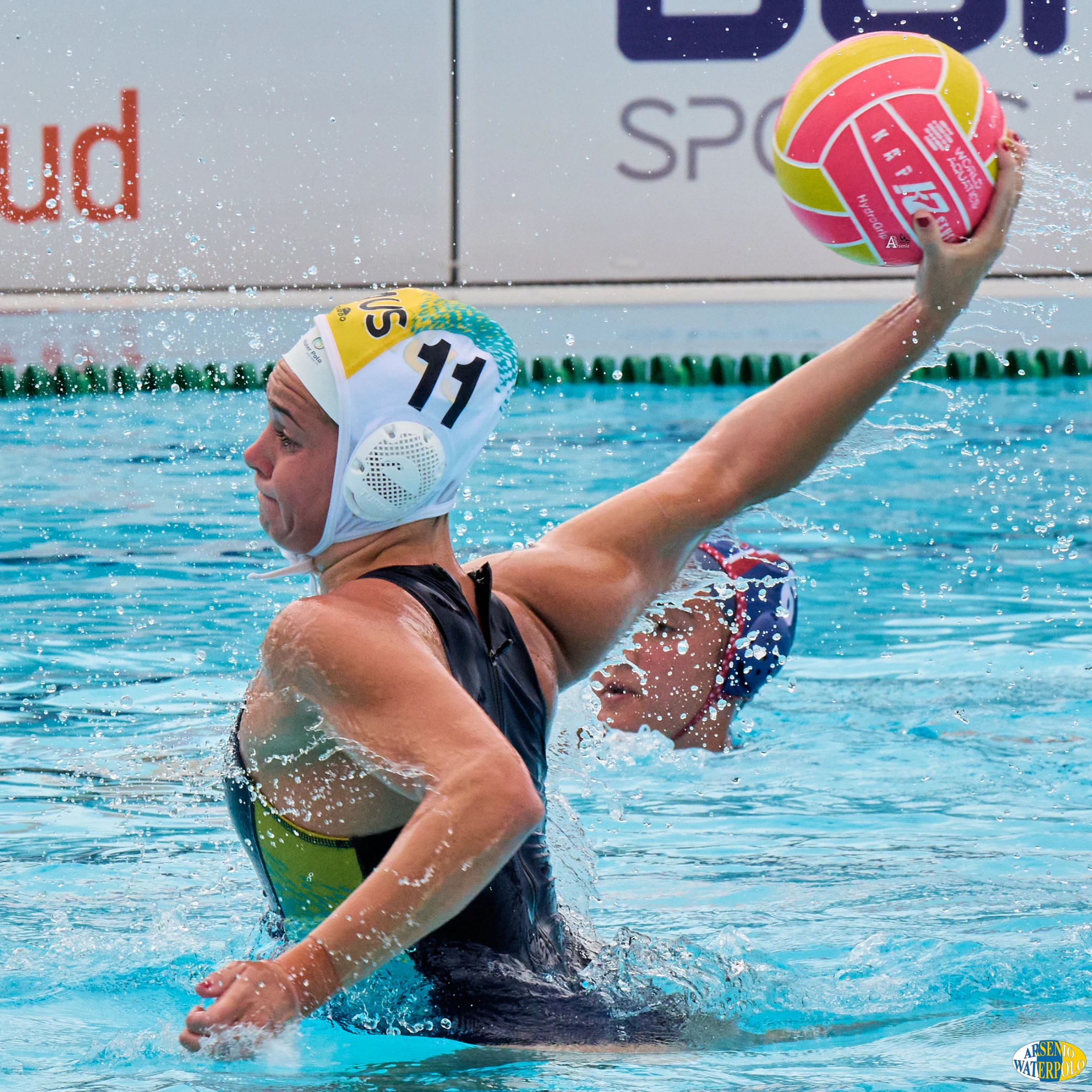
Bless Daly scored 42 goals across seven matches and walked away with the tournament’s Most Valuable Player award.
Caroline Healy produced nine saves in the final and was named Player of the Gold Medal Final.
Around them, an Australian team refused to be intimidated by the occasion.
This is what ambition looks like when nobody is watching closely enough.
And perhaps that is the uncomfortable part.
Australian water polo does not have the luxury of being one of the country’s dominant sporting brands.
It does not have the stadiums, broadcasting deals or cultural real estate occupied by Australia’s biggest football codes.
So its athletes have to earn attention the old fashioned way.
They have to win.
And that is exactly what these women did.
They did not win against an unknown opponent in an empty pool.
They beat Spain.
In Spain.
For the world title.
That matters.
Because sport is ultimately, brutally simple.
You can debate participation numbers. You can debate television audiences. You can debate whether a sport belongs in the national conversation.
But when the scoreboard says 9 to 5, there is very little left to debate.
WILL AUSTRALIA NOTICE?
The bigger question now belongs to Australia.
Will the country notice?
Or will this achievement be filed away as another nice story from a sport that supposedly sits somewhere outside the main event?
That would be a mistake.
Australia’s women’s water polo programme has already proved that its ceiling is extraordinarily high.
The Stingers won the first Olympic women’s water polo gold medal at Sydney 2000.
They won silver at Paris 2024.
Now, the next generation has claimed a world title of its own.
That is not nostalgia. That is a pipeline.
And pipelines matter.
Because the athletes who lifted the trophy in Tenerife are not finished products.
They are unfinished business.
They have years to get stronger.
Faster.
Smarter.
They will face harder opponents. Higher expectations. Bigger stages.
Some will make the senior national team. Some will not. Some will chase Brisbane 2032. Others will leave elite sport altogether.
But every one of them now knows something that cannot be taken away:
they can win at world level.
That changes a player.
It changes a team.
And eventually, it can change a sport.
So perhaps Australian water polo does not need to beg for attention.
Perhaps it needs to demand it.
The next generation has already done its part.
They went to Spain.
They faced the champions.
They took the title.
Now it is Australia’s turn to decide whether it is paying attention.
This was not the future of Australian water polo arriving.
This was the future announcing itself.
THE PLAYERS BEHIND THE BREAKTHROUGH
Below, I share conversations with two key players from this historic team: tournament MVP Bless Daly and captain Kiera Mironova.
First, I would like to congratulate all 14 players who competed at an exceptional level in Spain, as well as the entire coaching staff.
FABIO PAVANELLO | HEAD COACH
In my opinion, he gave the players the space to make important decisions, encouraged them to fight for one another and built them into a true team.
ZARA COOKE
A big heart and a great passion for the sport.
After winning three gold medals this year with her club, SNB Breakers, she has won a fourth, and certainly her most important.
ABIGAIL OATES
Having coached her, I cannot leave her unmentioned.
She has outstanding physical and technical talent. This success can motivate her to continue working hard and, one day, reach the senior national team.
EVELYN O’NEILL & ALANNAH PAUL
The youngest members of the group, both born in 2009, and perhaps two of its most exciting long term talents.
Both could become important players for the senior national team and the road to Brisbane 2032.
Best wishes to Caroline Healy, Sara Connors, Ali McCarthy, Claudia Booth, Emmersen McEwan, Amelie Hoefel, Sienna Walker and Isabelle O’Connor.
IN CONVERSATION WITH BLESS DALY
WORLD CHAMPION | MVP | 42 GOALS
At only 17, Bless Daly made her debut for the senior national team, the Aussie Stingers, and helped Australia win bronze at the 2026 World Cup in Sydney.
A few weeks later, she joined her U18 teammates at the World Aquatics Women’s U18 Water Polo Championships in Spain and delivered a remarkable tournament:
World Champion.
Most Valuable Player.
42 goals.
What emotions and memories do you take from the past two months?
“The last two months have been incredibly emotional and rewarding, and I feel so grateful to have had the opportunity to experience both tournaments.
Getting to play the sport I love alongside such supportive and inspiring teammates has made the last two months so special. With the Aussie Stingers, I was the youngest player and got to experience the World Cup environment at home in Sydney, which is something I’ll genuinely remember forever.
Then, being able to go to Spain with my U18 teammates and experience everything that came with that tournament was equally special. The friendships, the laughs, the tough moments and the memories we created together are what I’ll take away from it most.
Both tournaments were completely different experiences, but I feel incredibly lucky to have been part of both. They are memories I know I’ll carry with me for the rest of my career, and I’m just really grateful that I got to spend the last two months doing what I love with people who made it so special.”
How does it feel to be considered the best U18 female player in the world, and what advice would you give to a young girl or boy starting out in water polo today?
“It’s a huge honour, and I’m incredibly grateful to have been recognised in that way, but I definitely don’t feel like I’ve achieved everything. There is still so much I want to learn and improve, and I’m lucky to have incredible teammates and coaches around me who continue to push me.
I also think any individual award is a reflection of the team around you. I wouldn’t have had the tournament I did without the belief and support of my teammates.
For any young player starting water polo, I would say to enjoy it, work hard and believe in yourself. There will be difficult moments and times when things don’t go your way, but those moments are part of the journey and help you grow.
Most importantly, don’t let where you come from or where you start determine where you think you can go. If you’re willing to work for something, believe in yourself and stay committed to your goals, you can achieve things you might never have thought were possible.”
Economic discussion often remains taboo in water polo. What needs to happen to create sustainable professional opportunities for senior athletes in Australia? How can the sport gain greater visibility and attract more fans?
“I think creating more sustainable professional opportunities for water polo players in Australia is really important for the future of the sport. Our senior athletes make huge sacrifices to represent Australia, and having more professional opportunities would allow athletes to focus more on developing and competing at the highest level.
I also think the sport has a huge opportunity to grow its visibility by showing people what water polo is really about. It’s incredibly fast, physical and tactical, but there’s also so much personality, emotion and passion within the teams.
Social media is a great way to show that side of the sport and bring people along for the journey. I think our U18 team showed that you don’t necessarily have to be the favourites to create something special. We were underdogs, but as our belief grew, so did our results.
Hopefully, we can continue telling those stories and getting more people excited about watching and following water polo.”
What are your plans for the coming season?
“For this upcoming season, I’m planning to stay in Australia and continue developing within the Australian system, while seeing what opportunities open up for me.
My biggest goal is to keep improving as a player and work towards my dream of being part of the Australian Olympic team for LA 2028.
I know there is a long way to go and a lot of work to be done before then, so I’m trying not to look too far ahead. I want to focus on improving every day, learning from the experienced players and coaches around me, and earning every opportunity I get.
LA 2028 is definitely something I dream about, but for now, it’s about putting in the work and seeing where that takes me.”
Wishing you all the best, Bless.
YD
IN CONVERSATION WITH KIERA MIRONOVA
CAPTAIN | WORLD CHAMPION
A talented and reliable player, Kiera Mironova captained the U17 NSW Blues in 2025, winning silver at the National State Championships.
She captained the U18 Sydney University team in 2026, winning silver at the Australian Youth Water Polo Championships.
And finally, she captained Australia’s U18 national team to a world championship gold medal in Spain.
When did you and the team realise that winning gold was genuinely possible?
“There was always an underlying belief from the start, but this definitely grew each time, especially as we progressed through the group stage to the playoffs.
We always knew it would be hard, so we needed to remain focused on one game at a time and not get ahead of ourselves.
At least for me, it never truly dawned on me what we had achieved until that final buzzer sounded, or even well after.”
What was the most difficult thing to manage, both as captain and as a player, during the competition and the entire overseas trip?
“The fatigue, both mental and physical, is something that becomes progressively harder to manage as our time overseas continues and the tournament develops.
Having a group of such different people, each bringing their own unique qualities to the team, is never going to be easy.
However, I think we were all united by a common goal, and the amazing coaches and staff definitely helped bring the group together.”
What impact can this gold medal have on younger generations?
“This was Australia’s first U18 world title and the first women’s junior championship gold since 2007.
I think it has a particular impact on Australian youth, who can see that Australia has a place at the top of water polo and can not only rival the leading European teams, but also beat them.”
As you prepare to start college and take the next steps in your career, what would you change or introduce to help water polo in Australia become as popular and sustainable as sports such as the NRL, AFL and football?
“I think water polo is a lesser known sport that lacks the exposure it deserves and needs greater levels of funding, particularly within Australia, in order to grow and become more popular.”
Udachi, Kiera!
YD
COMING NEXT FROM YARIM DELPINO
Australia’s men’s national water polo team
Emerging talent, working methods and results.
Inside the Australian water polo system
Facilities, private schools, player costs and the role of parents.
Water Polo 4x4 Open Championships
Marketing and Water Polo by the Sea.
Australia’s emerging coaches
And the arrival of Boba Nikic.
ABOUT THE AUTHOR
YARIM DELPINO
Sports Writer, Editor and Lifelong Water Polo Insider
Analyst and Observer of the Modern Game
Yarim Delpino is a sports writer, editor and lifelong water polo insider, analyst and observer of the modern game.
With a particular interest in the athletes shaping Australia’s next sporting era and an instinct for the forces transforming the sport, Delpino looks beyond the scoreboard to explore the personalities, pressure and ambition behind elite competition.
His style is incisive yet understated, bringing overlooked sporting stories into sharper focus and asking why some achievements command attention while others quietly change the game from within.
For Delpino, sport is never simply about who won.
It is about who is coming next.
YARE | VOICES OF WATER POLO
Where Water Polo Lives. Every Day.
PHOTO GALLERY