Dimitrios Kratimenos: “A goalkeeper’s responsibility goes far beyond making saves”
From Greece to Brown University. Dimitrios Kratimenos talks about NCAA water polo, his development as a goalkeeper, the demands of college life and why his position is about far more than making saves.
 By Mara Voss · Features Editor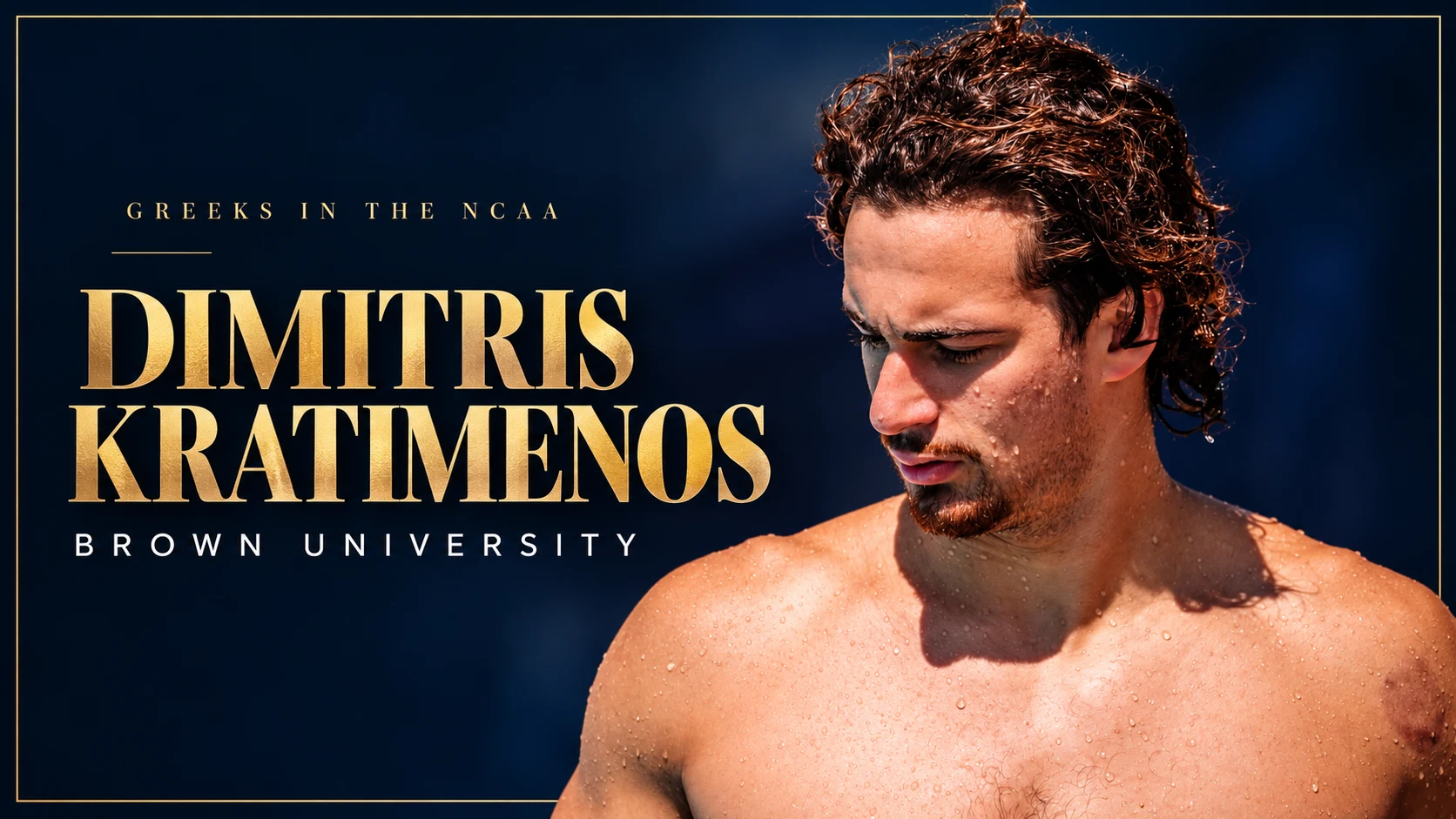
GREEKS IN THE NCAA
From representing Greece to Brown
Dimitrios Kratimenos arrived at Brown in 2024 having already distinguished himself with Panathinaikos and Greece’s age group national teams. His development in Greece included national youth titles and international recognition in goal.
With Greece, he earned bronze at the 2021 U15 European Championship, silver at the 2022 U16 World Championship in Volos and gold at the 2023 U17 European Championship in Manisa. He was named best goalkeeper at all three tournaments, adding individual recognition to those team achievements.
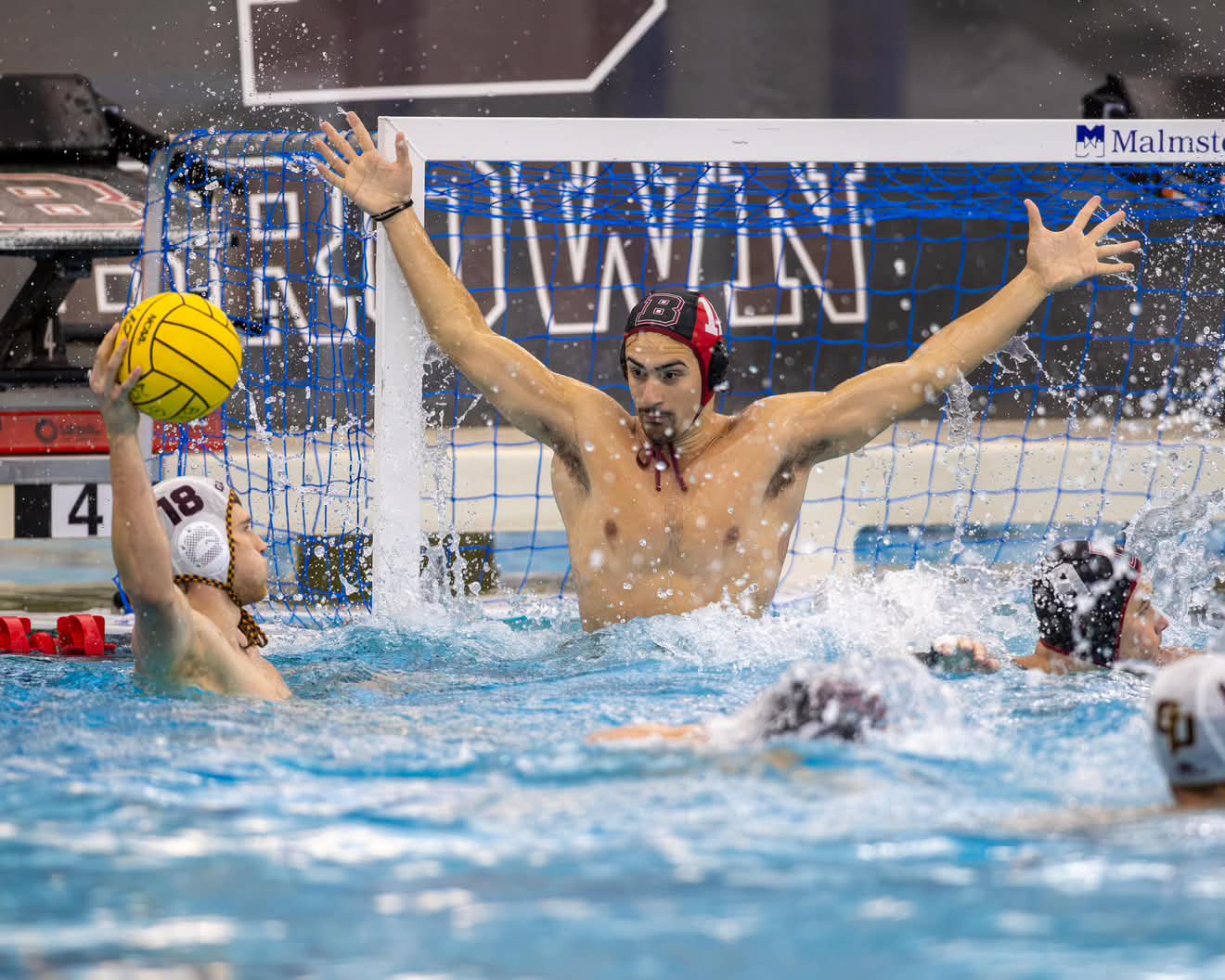
Moving to the United States opened a new chapter. In his first season at Brown in 2024, he recorded a team-leading 162 saves, including a season-high 19 against Navy. He finished seven games with double-digit saves and helped Brown reach the Northeast Water Polo Conference championship game.
His performances earned him ACWPC Honorable Mention All-American recognition, a place on the All-NWPC Second Team and selection to the NWPC All-Tournament First Team.
In 2025, he again led Brown with 169 saves and received a second All-NWPC Second Team selection. Across his first two collegiate seasons, he accumulated 331 saves.
In September 2026, he received further recognition when he was included among the 20 athletes on the Cutino Award Watch List for the 2026/27 academic year, highlighting players to follow for the award recognising the outstanding player in men’s collegiate water polo.
That journey provides the context for his conversation with YARE. Behind the saves and individual honours, Kratimenos describes how his understanding of the position continues to develop, particularly his relationship with the defence and his responsibility to the team.
Dimitris Kratimenos: “As a goalkeeper, my responsibility goes far beyond making saves”
From Greece to Brown University. Dimitris Kratimenos speaks to YARE about choosing the United States, the differences between European and American water polo, his development in goal, and a daily routine that brings together competitive sport and demanding academic studies.
There are aspects of a goalkeeper’s development that no statistic can capture.
It is not just about saves. It is not about penalty save percentages. It is not about minutes played. It is about the moment a goalkeeper begins to understand his position differently.
For Dimitris Kratimenos, that development is connected to his decision to leave Greece and continue his journey in the United States at Brown University.
The original idea was clear: to combine high level water polo with an excellent education. Along the way, however, the experience became something bigger.
A new country. A different game. A different daily routine. And a new way of seeing his role within the team.
“Being a leader and communicating effectively can be just as important as stopping the ball.”
Two ambitions he wanted to pursue together
What made you choose the American university route, and why Brown in particular?
For Kratimenos, the answer begins with two goals he did not want to treat as competing priorities.
“For me, the American university route was an opportunity to combine two things that were extremely important: playing water polo at a very high level and, at the same time, getting an excellent education.
If I had stayed in Greece, combining professional level water polo with university would have been much more difficult and, realistically, it could have taken me five or six years to complete my degree. In the United States, I knew I could compete at a high level while also graduating in four years.
Brown offered me that combination at an exceptional level.”
His decision, however, was not shaped solely by the athletic and academic opportunities. His first impression of the coaching staff also played an important role.
“From the recruitment process, I felt that the coaching staff genuinely cared about their players’ development, both in and out of the pool. That was important to me.”
There was something else, too: the desire to test himself beyond the environment he already knew.
“I wanted a new challenge. To step outside my comfort zone, experience a different culture, meet people from all over the world and broaden my horizons.”
Looking back, he says that the opportunity to grow both in and out of the pool was exactly what he had been seeking.
From the European game to American college water polo
What was the biggest adjustment when you moved from Greek water polo to the American college game?
For him, the biggest difference was less about the goalkeeper’s position itself and more about the game around it.
“The biggest adjustment was probably the style of play and the way games are officiated.
Greek and European water polo in general can be a little more physical, while in the United States certain situations are called differently by referees, so I had to adjust at first.”
In goal, however, the fundamental task remains the same.
“At the end of the day, my job is still the same: to stop the ball, communicate with my defence and help my team win.”
As he explains, Brown’s coaching staff helped him understand those differences quickly and adapt to the college game.
The value of time in the water
How has playing in the United States helped you develop as a goalkeeper?
His answer begins with something that is difficult to replace for any goalkeeper: experience.
“The most important thing is the high level experience I have gained. I have had the opportunity to play a lot of minutes and compete against excellent players and very strong teams.”
“For a goalkeeper, that experience is incredibly valuable.”
He also credits his coaches with a significant part of his development.
“They trusted me, gave me opportunities to play in important situations and constantly push me to improve. They are always looking at the details of my game and finding ways for me to get better.”
He does not single out goalkeeper training alone. He speaks about the entire environment: training, strength work, recovery, guidance and facilities.
“When you are in an environment every day where everyone wants to make you better, it is almost impossible not to develop as a player.”
When the biggest change is your voice
Which part of your game do you think has improved the most since arriving at Brown?
Kratimenos sees changes almost everywhere. His legs are stronger. His reactions have improved. He now feels significantly more effective against penalties.
But one change stands out above the rest: communication.
“Before Brown, I was not always particularly vocal in goal. Now I communicate constantly and organise the defence.”
That is also where his understanding of the position begins to change.
“Our coaches helped me understand that, as a goalkeeper, my responsibility goes far beyond making saves.”
A goalkeeper has almost the entire game in front of him. He sees the movement. The gap. The unmarked player. The danger before it becomes a shot.
And often, his first intervention does not need to be a save. It needs to be his voice.
“Being a leader and communicating effectively can be just as important as stopping the ball.”
The daily routine behind the games
How demanding is it to balance Brown’s academic commitments with water polo at this level?
Kratimenos makes no attempt to present his daily routine as easy.
“It is extremely demanding. I am not going to lie about that.”
His day is divided between classes, practice, strength training, treatment, recovery and studying. Free time, particularly during the season, is limited.
Brown has high academic expectations. Water polo at this level also requires an enormous commitment.
He says the coaching staff’s approach makes a significant difference.
“They want us to succeed in the pool, but they also genuinely care about our studies and our lives outside water polo.”
And when the conversation turns to the idea of sacrifice, his answer is clear.
“I do not really see it as a sacrifice, because these are two things I genuinely want to do.”
One step at a time
What is your next goal, both in water polo and after university?
There is no rigid plan for the next ten years. There is the present.
“I try to take life step by step. Right now, my focus is on Brown and this season.”
The team’s competitive goal is clear: to win its conference championship, reach the NCAA Championship and then see how far it can go.
For life after university, there are ideas and ambitions, both in water polo and professionally. But he does not feel the need to map out every detail just yet.
“I prefer to take things year by year, keep working hard and make the most of the opportunities that come my way.”
“Take the risk”
What would you say to a young Greek athlete considering the American university route?
Here, there is little hesitation.
“I would one hundred per cent tell them to consider it. Coming to the United States was truly one of the best decisions I have made.”
As he describes it, the experience extends beyond the pool. It is the education. The people. The friendships. The travel. The opportunity to discover a different world at a young age.
“The last three years at Brown have truly been some of the best years of my life.”
And his message to the next young athlete who might be in Greece today, considering the same step, is simple.
“Take the risk. Step outside your comfort zone. Discover something new and chase your dreams. We do not have unlimited opportunities in life, and you never know where one decision might lead you.”
More than a save
Dimitris Kratimenos went to the United States looking for a way to bring two worlds together: sport and education.
Along the way, he found something more. A different way of understanding his position.
Stronger legs matter. Better reactions matter. A penalty save can change a game.
But a goalkeeper’s work begins before the shot. In observation. In communication. In organisation. In leadership.
The goalkeeper may be the last player before a goal. But he is often the first to see what is about to happen.
PHOTO GALLERY