BRNO | The map of youth water polo is bigger than we thought
Moldova on top, Great Britain one goal from the title, South Africa on the podium and Cyprus in the top four. The EU Nations Junior Men Cup in Brno highlighted a side of youth water polo that deserves more attention.
 By Alex Riva · International Editor
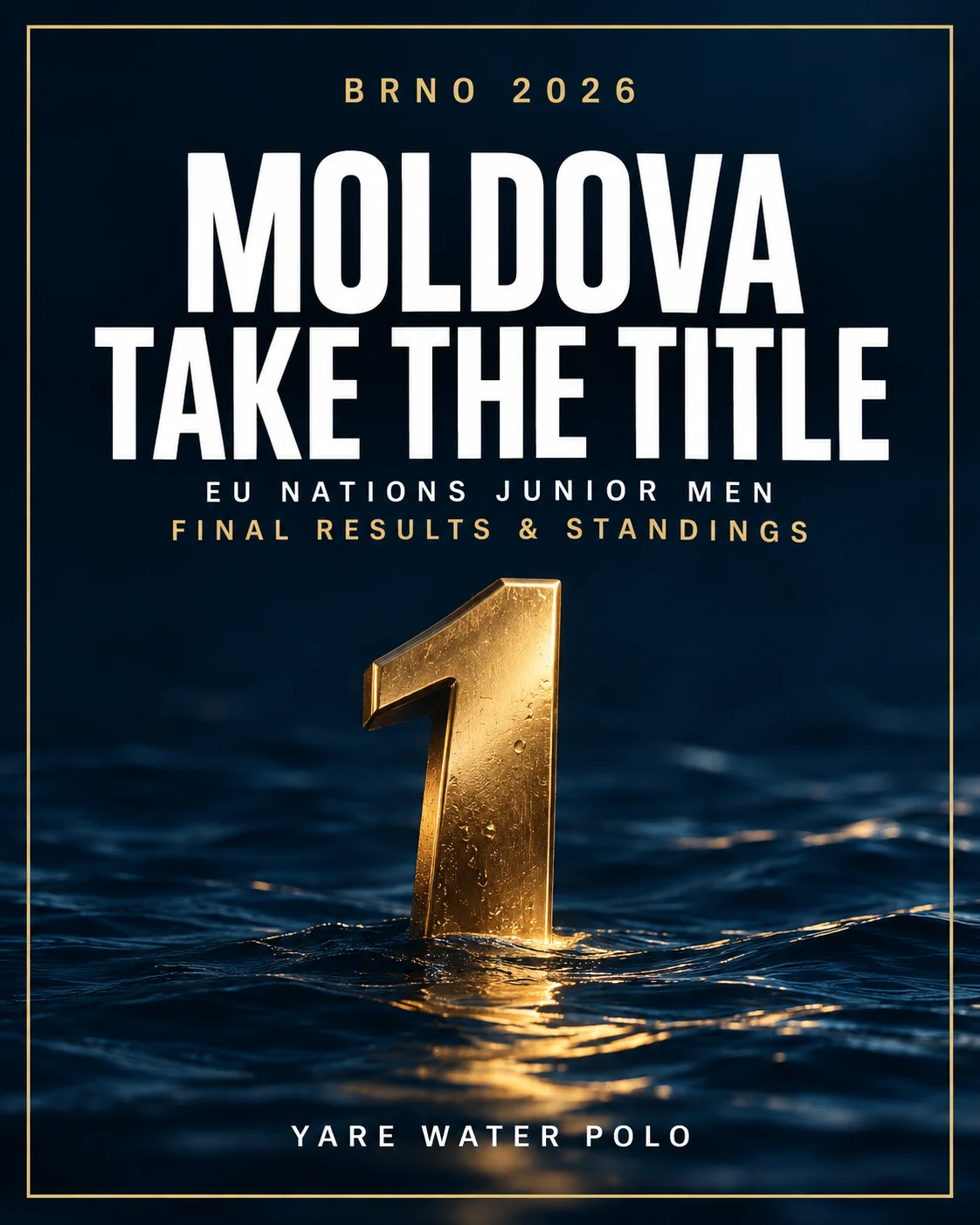
Moldova won the EU Nations Junior Men Water Polo Cup unbeaten, Great Britain came within one goal of the title, and South Africa climbed onto the podium. Brno showed that youth water polo does not have a single centre of gravity, and that the next strong teams may come from places we have not watched closely enough.
A final that captured the whole tournament
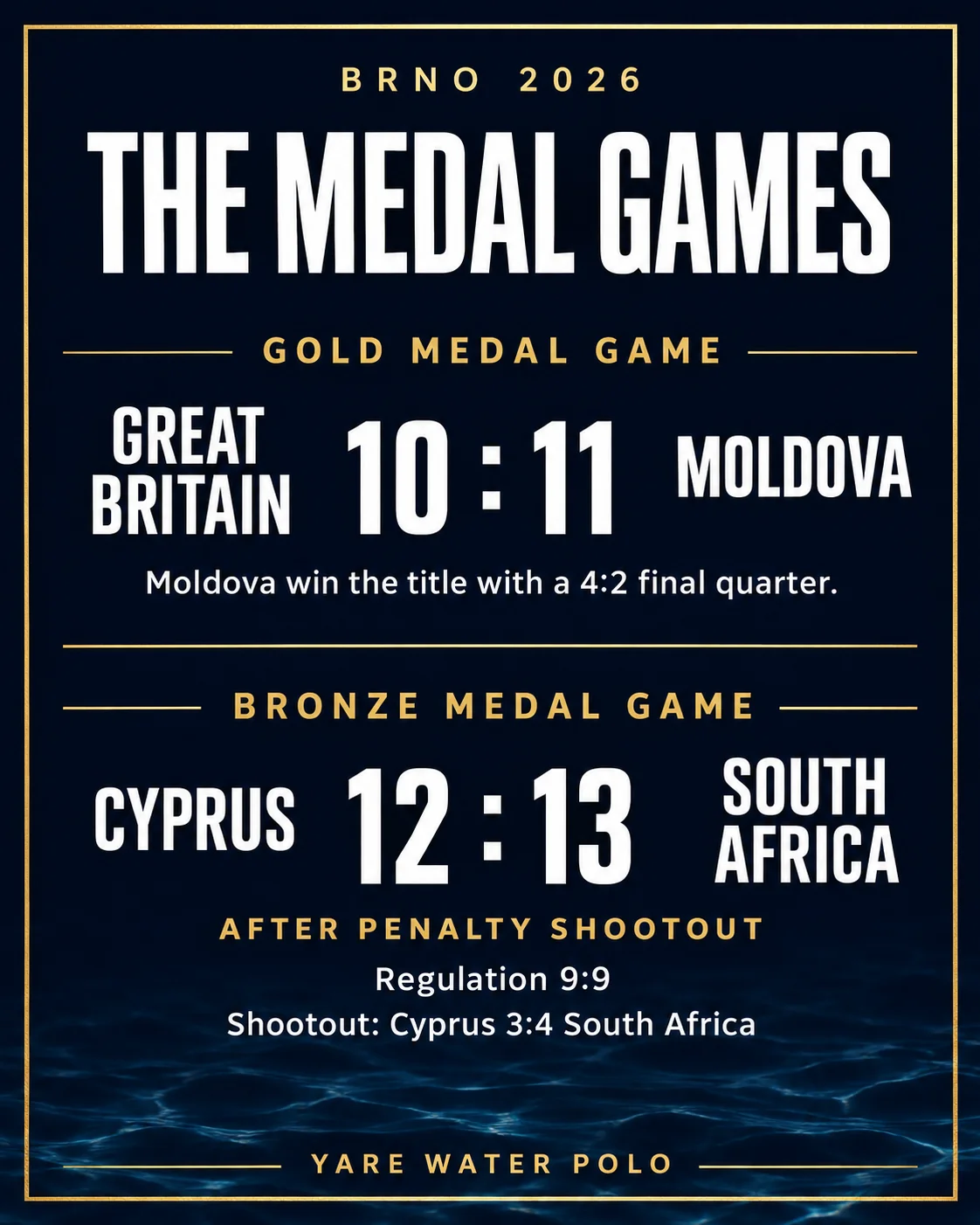
The title in Brno was decided by one goal. Moldova beat Great Britain 11–10 in the final, completing a run of five wins from five matches. The result was more than the ending to a dramatic final. It was the clearest picture of a tournament in which the top of the standings had no predetermined owner.
Twelve teams took part, and the competition closed on 8 November with three placement games decided by margins of one, four and six goals. South Africa edged Cyprus 13–12 in the bronze medal game. Austria beat Poland 18–14 to take fifth place, while Lithuania defeated hosts Czechia 13–7 to finish seventh.
Moldova held its nerve when the game changed
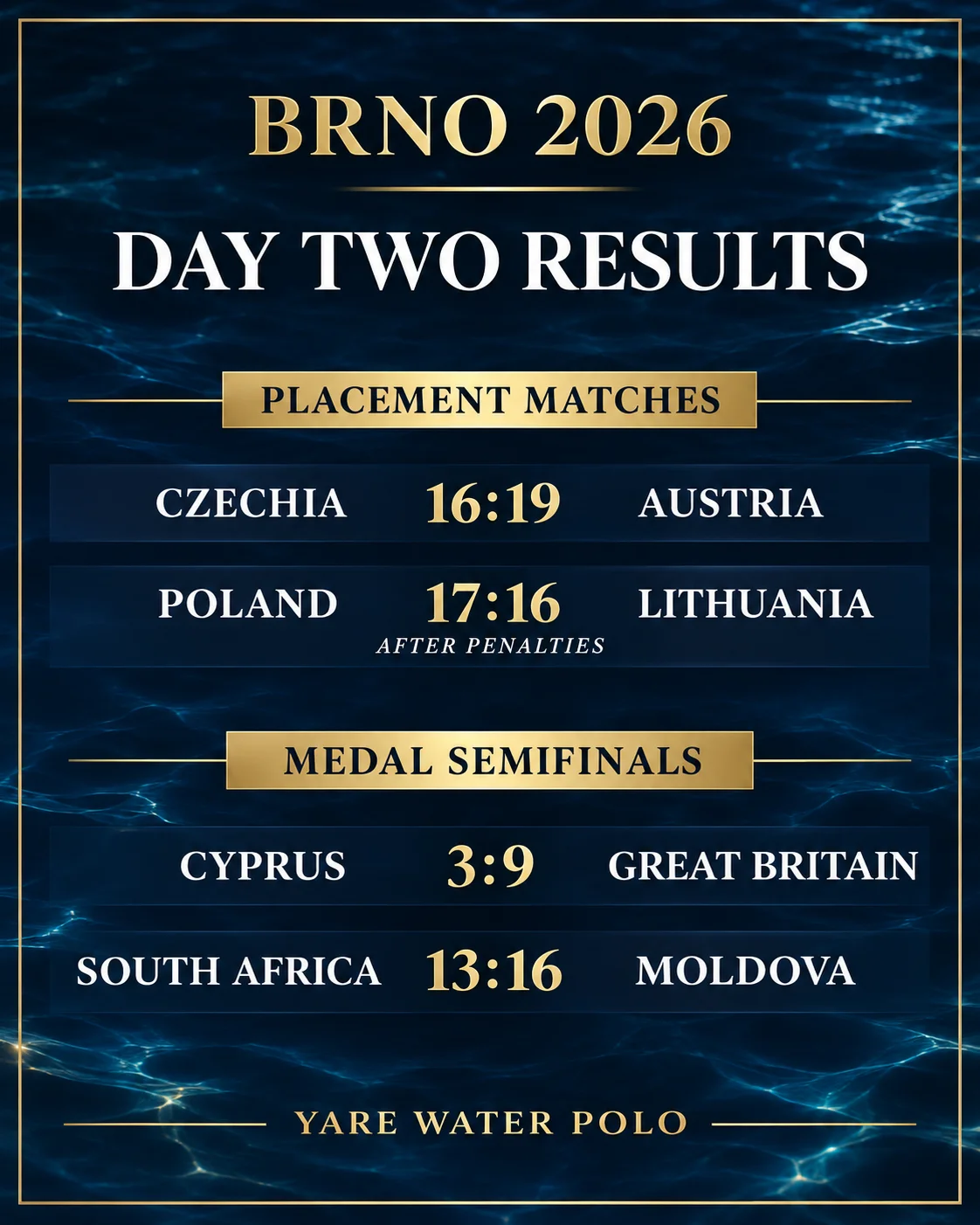
Moldova did not take a straightforward route to the title. The team came through its group with wins over Austria and Germany, edged Lithuania 12–10 in the quarter-finals, and beat South Africa 16–13 in the semi-finals.
The final against Great Britain tested Moldova’s ability to adapt. Moldova led 6–4 at half-time, but Great Britain won the third quarter 4–1 and entered the final period ahead 8–7. At 9–9, Chiril Talmazan scored his sixth goal to put Moldova back in front. Vladimir Coloscov made it 11–9 before Great Britain pulled one back for the final 11–10.
What stood out was not only Moldova’s finishing. It was the team’s composure when the game moved away from its original plan. A youth tournament is not won through a good start alone. It is also decided by a team’s ability to find its way back to the right decisions under pressure.
South Africa was more than a one-day surprise
South Africa’s third-place finish matters more when we look at the full campaign. The team beat Estonia 22–4 and Czechia 21–16 in the group stage, eliminated Poland 14–6 in the quarter-finals, and came close to the final before losing 16–13 to Moldova.
South Africa then claimed bronze with a 13–12 win over Cyprus. Four matches against different styles, three wins and one narrow semi-final defeat. That is more meaningful than a one-off surprise: a team showed it could respond to different demands throughout the same tournament.
Cyprus, meanwhile, reached the last four after beating Czechia 14–11 in the quarter-finals. It lost 9–3 to Great Britain in the semi-finals and then fell to South Africa by a single goal in the bronze medal game. Fourth place leaves the disappointment of a missed medal, but also a clear sign of competitiveness.
The results told a story beyond the finalists
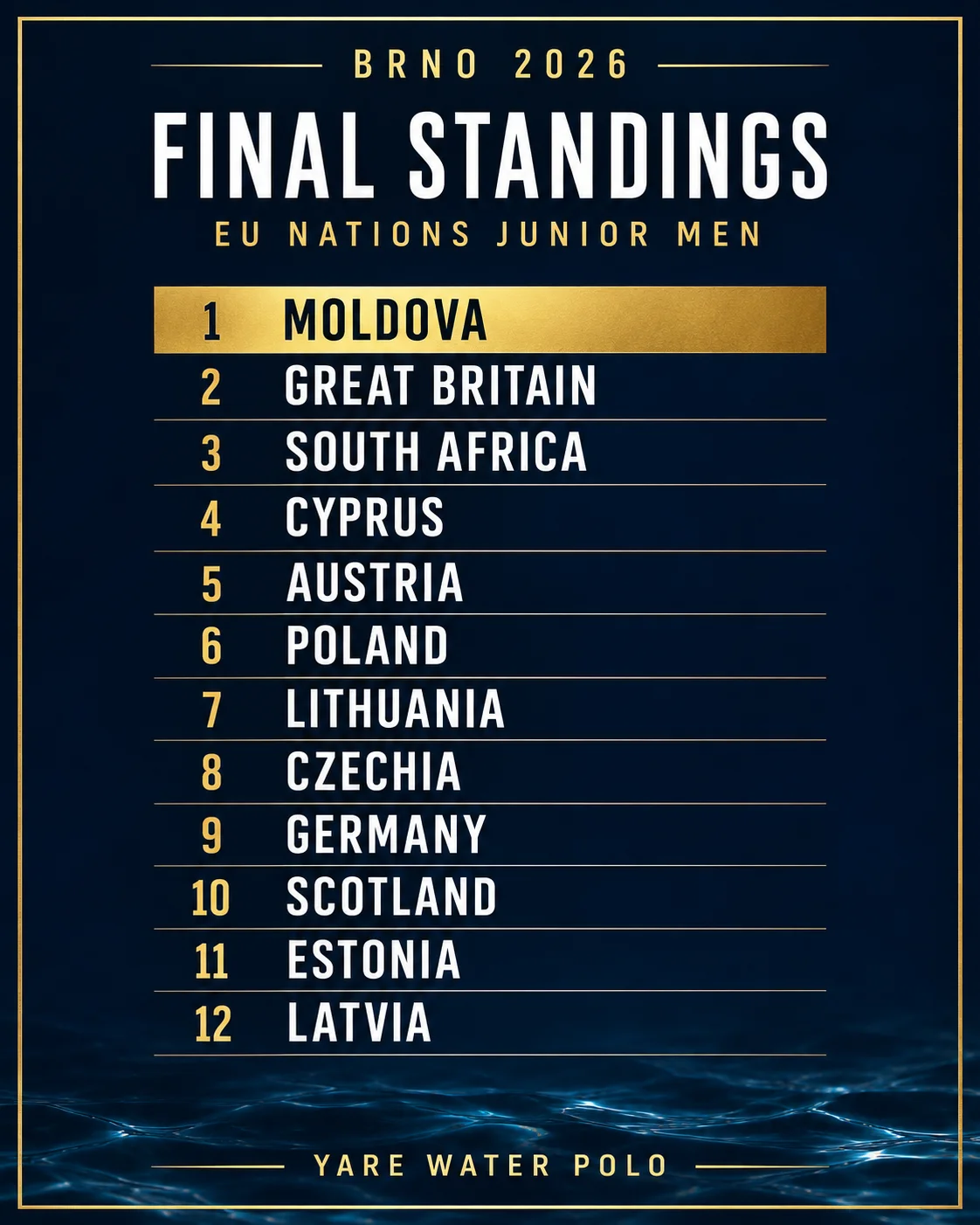
The final standings completed the picture: Moldova, Great Britain, South Africa, Cyprus, Austria, Poland, Lithuania, Czechia, Germany, Scotland, Estonia and Latvia.
Hosts Czechia finished eighth. Germany, which won all three of its matches in the 9th–12th place group, finished ninth. Estonia did not reach the top eight, but Roland Melnik finished as the tournament’s leading scorer with 20 goals. Cyprus goalkeeper Romylos Hartziotis was named Best Goalkeeper, while Coloscov received the MVP award.
These individual honours do not take away from the team results. They broaden the story. Brno highlighted players from teams that often sit outside the front line of European coverage and gave more countries the chance to compete for something meaningful.
What Brno leaves behind
A three-day tournament does not change the balance of international water polo on its own. It can, however, reveal where competition is growing beyond the areas we follow most closely. In Brno, Moldova won by maintaining its level across five matches. Great Britain showed it could turn the final around. South Africa proved its podium finish was no accident. Cyprus came within two matches of a medal.
For these teams, the value of the tournament does not end with the presentation. The next step is to carry the decisions, intensity and experience from Brno into daily club work and the next international competitions.
The main message from Brno is not simply that a new champion emerged. It is that youth water polo has more centres of competition than we tend to recognise. To see which of them will grow, we need to keep watching.
Tags